
How Windstorms Affect Commercial Roofing Across Puget Sound
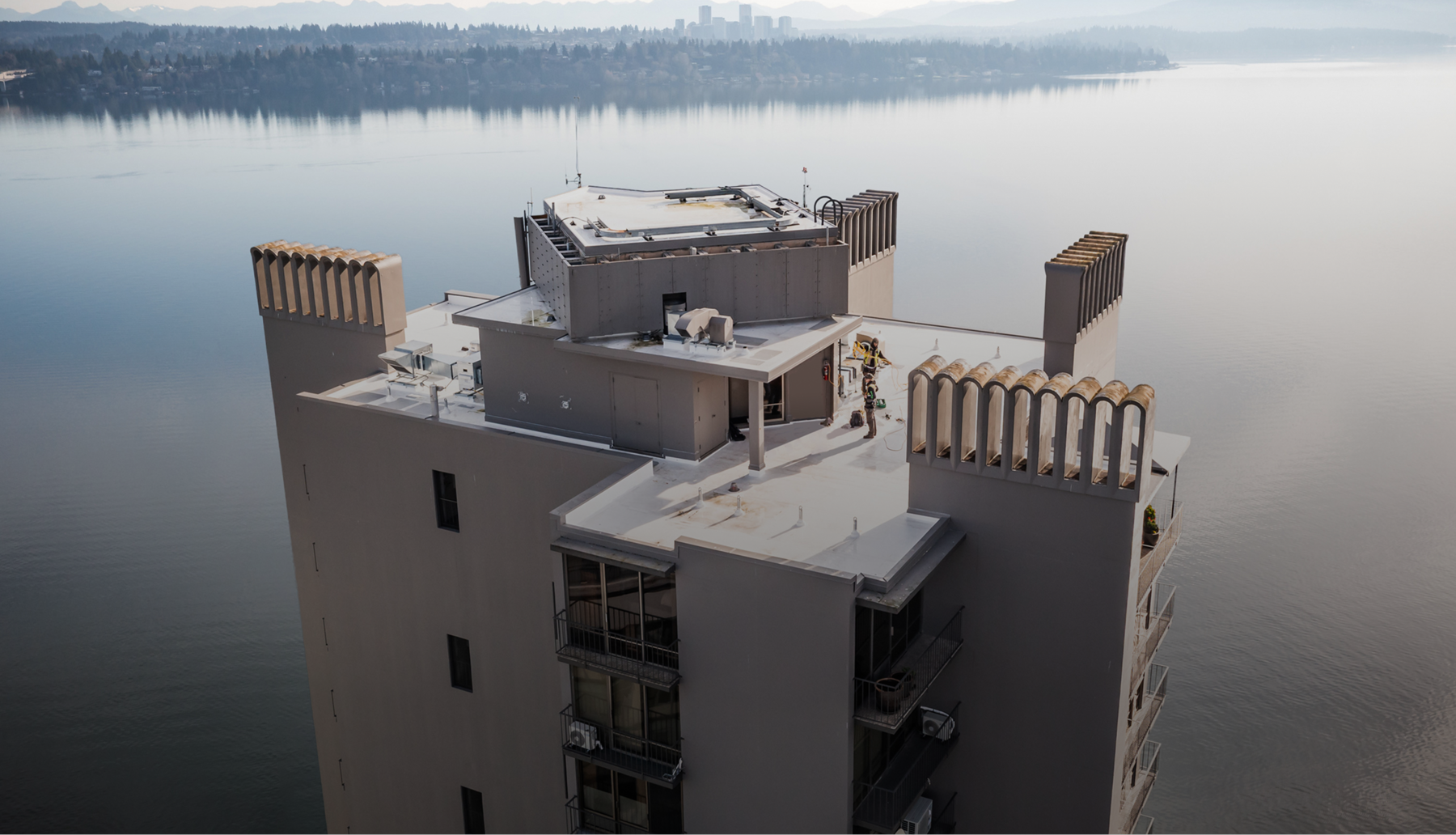
Windstorms are a familiar part of life across Puget Sound, especially during the fall and winter months. Strong gusts, driving rain, falling branches, and windblown debris can put significant stress on commercial roofing systems throughout Seattle and the surrounding region.
For building owners and property managers, wind damage is not always obvious from ground level. A roof may appear intact while loose membrane sections, damaged flashing, compromised seams, or displaced rooftop components create opportunities for water intrusion.
Understanding how windstorms affect Seattle commercial roofing, and knowing what to check afterward, can help businesses identify problems early and protect their buildings from more extensive damage.
Why Puget Sound Windstorms Can Be Hard on Commercial Roofs
Commercial roofs in Western Washington face a challenging combination of wind and moisture. When a storm moves through Puget Sound, the roofing system must resist both direct wind pressure and uplift forces.
Wind does not move evenly across a roof. As air travels over and around a commercial building, pressure can become especially strong along roof edges and at corners. These areas are often among the first places where weaknesses become apparent.
The situation can become more serious when heavy rain accompanies the wind. Even relatively small openings in flashing, seams, penetrations, or membrane systems can allow moisture into the roofing assembly.
For businesses searching for commercial roofing solutions, storm resistance should therefore be considered alongside waterproofing and drainage.
Common Types of Commercial Roof Wind Damage
The type and severity of storm damage depend on the roofing system, building design, roof condition, installation quality, and intensity of the storm. However, several problems are particularly important to watch for.
Loose or Damaged Roofing Membranes
Strong winds can place uplift pressure on single-ply and other membrane roofing systems. If an area is already loose or inadequately secured, wind can cause the membrane to lift, wrinkle, pull away, or tear.
Once the membrane has been compromised, rainwater may be able to enter the roofing assembly.
Damaged Flashing and Roof Edges
Perimeter flashing, coping, and other edge components are particularly exposed to wind. Loose or damaged metal can leave vulnerable portions of the roofing system exposed.
Because roof edges play an important role in protecting the overall assembly, these issues should be evaluated promptly.
Damage From Falling Branches and Debris
Puget Sound's tree-covered neighborhoods and commercial areas create another storm-related concern: falling limbs and windblown debris.
Branches can puncture roofing membranes or damage rooftop equipment. Smaller debris may also accumulate around drains and scuppers, interfering with proper drainage.
Problems Around Rooftop Equipment
Commercial roofs frequently contain HVAC equipment, vents, skylights, pipes, and other penetrations. Windstorms can affect flashing, seals, curbs, and surrounding roofing materials.
These areas deserve careful attention during a post-storm inspection because even a small failure around a penetration can eventually lead to water intrusion.
Clogged Drains and Standing Water
Wind can deposit leaves, needles, branches, and other debris across a commercial roof. If that material blocks drains or drainage paths, rainwater may begin accumulating.
Standing water can increase stress on the roofing system and may worsen existing defects. Keeping drains and scuppers clear is particularly important during Western Washington's wet season.
Wind Damage Isn't Always Immediately Visible
One of the challenges with commercial roofing damage is that the first warning sign may not be a dramatic leak.
A storm can loosen flashing, stress membrane seams, damage sealants, or create small punctures that allow moisture to enter gradually. In some cases, building owners may not notice an interior problem until another period of heavy rain.
That is why having an experienced Seattle commercial roofer like Axiom D7 evaluate the roof after a significant wind event can be worthwhile, particularly for older roofs or buildings with a history of leaks.
Early detection can make the difference between addressing a localized repair and dealing with moisture that has spread through a larger portion of the roofing assembly.
Preventive Maintenance Matters Before Storm Season
The best time to discover a weak seam or loose piece of flashing is before the next major windstorm.
Routine commercial roof maintenance provides an opportunity to identify aging materials, deteriorated sealants, drainage problems, damaged flashing, membrane defects, and other conditions that could become more serious during severe weather.
A preventive maintenance program can also help building owners better understand the condition of their roof over time. Instead of waiting for an emergency leak, property managers can plan repairs and maintenance around the building's needs and budget.
For commercial properties across Seattle and Puget Sound, inspections before and after the stormiest months can be an important part of a long-term roofing strategy.
Waterproofing Is Part of Storm Protection
Wind-driven rain can reach areas that ordinary rainfall may not, exposing weaknesses around penetrations, transitions, walls, flashing, and other vulnerable locations.
Effective commercial roofing + waterproofing helps create another layer of protection against Western Washington's wet weather. Maintaining seals, flashing details, membranes, and drainage systems can reduce opportunities for moisture to enter the building envelope.
When Should You Call a Commercial Roofer After a Storm?
Not every windstorm causes roof damage, but an inspection may be appropriate when a building experiences unusually strong winds, falling debris, visible roofing damage, or new signs of water intrusion.
Prompt attention is especially important if you notice an active leak or displaced roofing materials.
As a professional commercial roofing contractor, Axiom D7 can assess the condition of the roof, document problem areas, determine whether repairs are needed, and recommend appropriate next steps.
Protect Your Puget Sound Commercial Roof With Axiom D7
Commercial roofs across Puget Sound have to perform through wind, rain, falling debris, and months of wet weather. Regular inspections and preventive maintenance can help identify vulnerabilities before they develop into larger roofing problems.
Axiom D7 provides commercial roof installation, repair, maintenance, and waterproofing services for businesses in Seattle and the surrounding Puget Sound region. Contact us to learn more.
