
Waste Management
Industrial
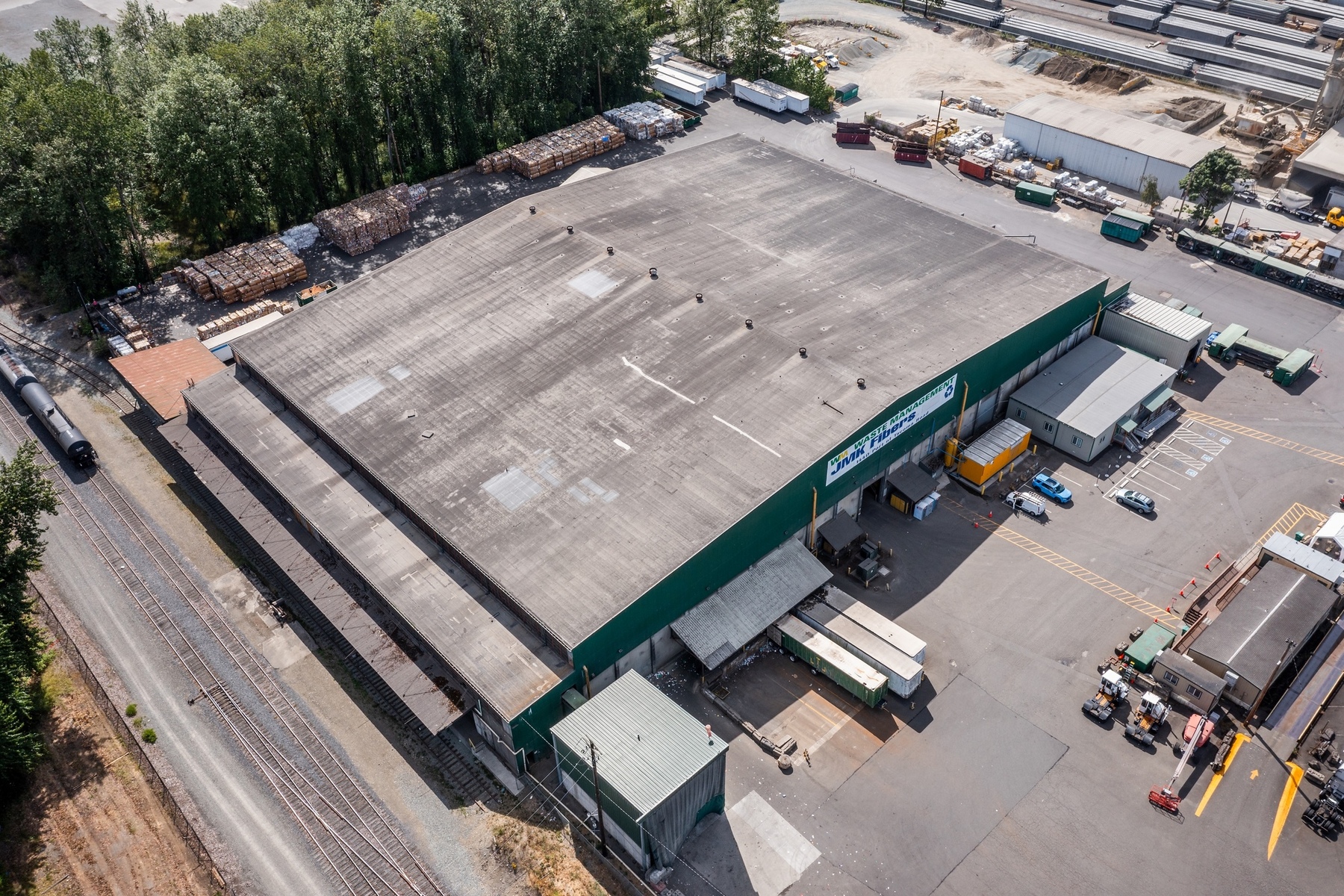
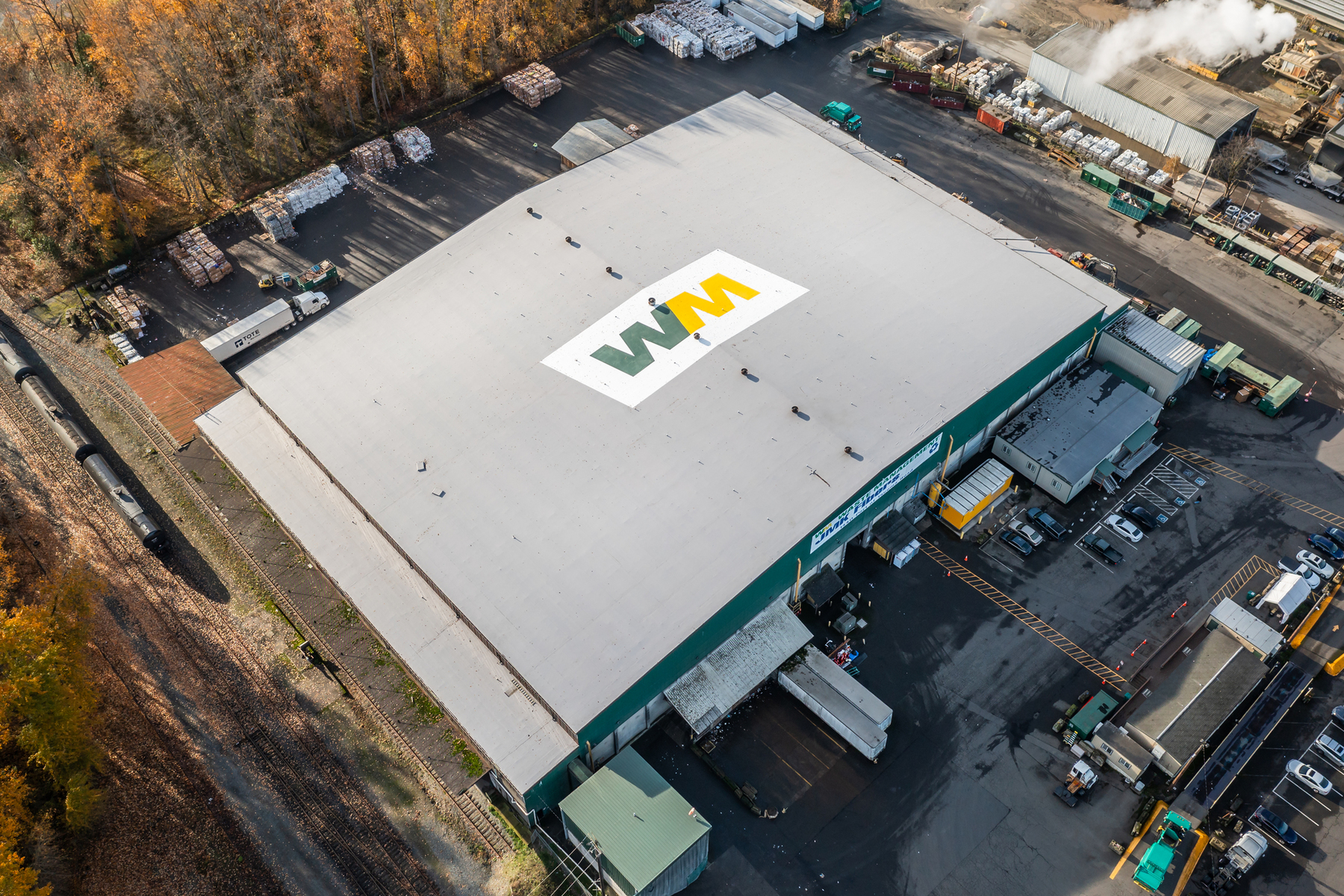
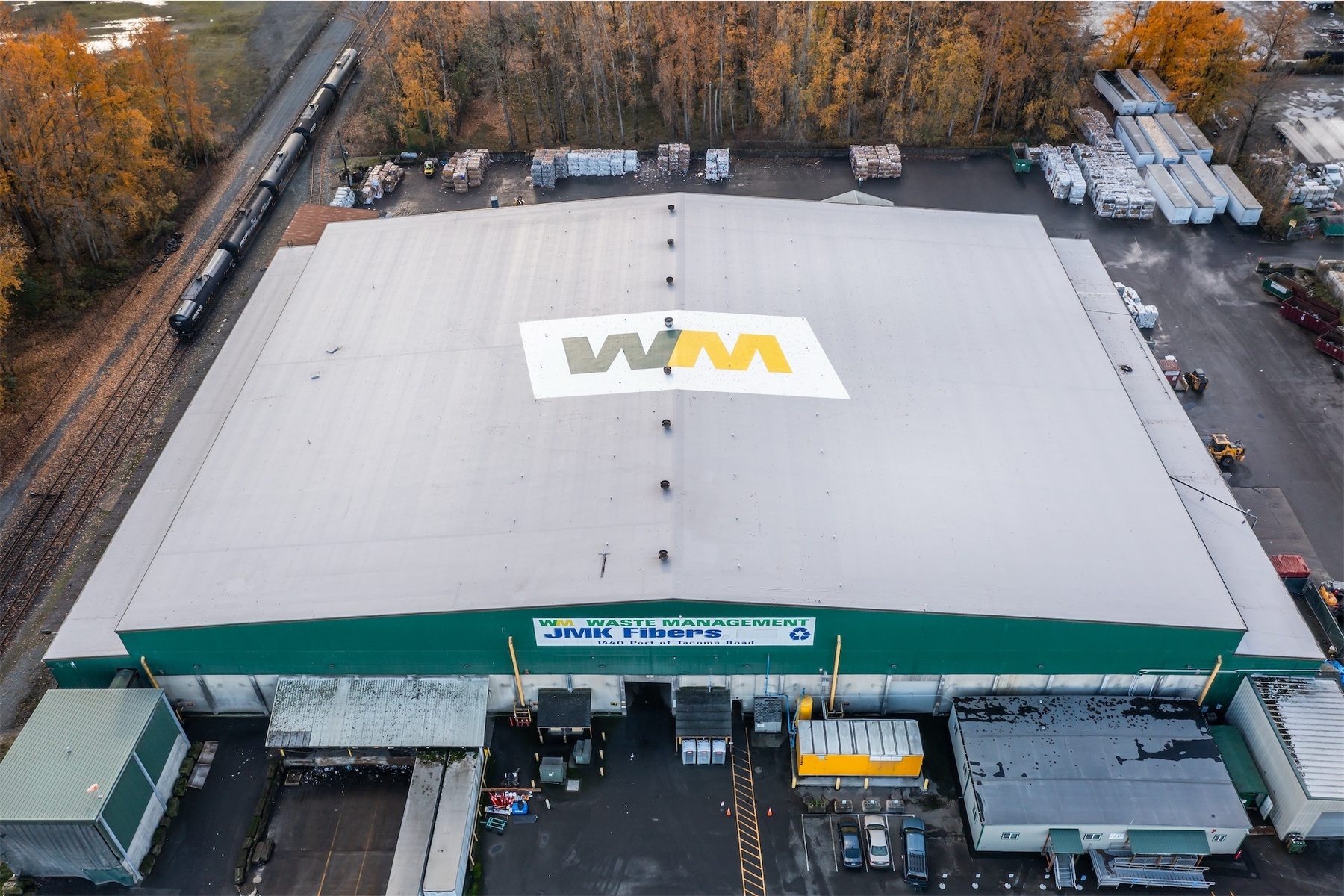
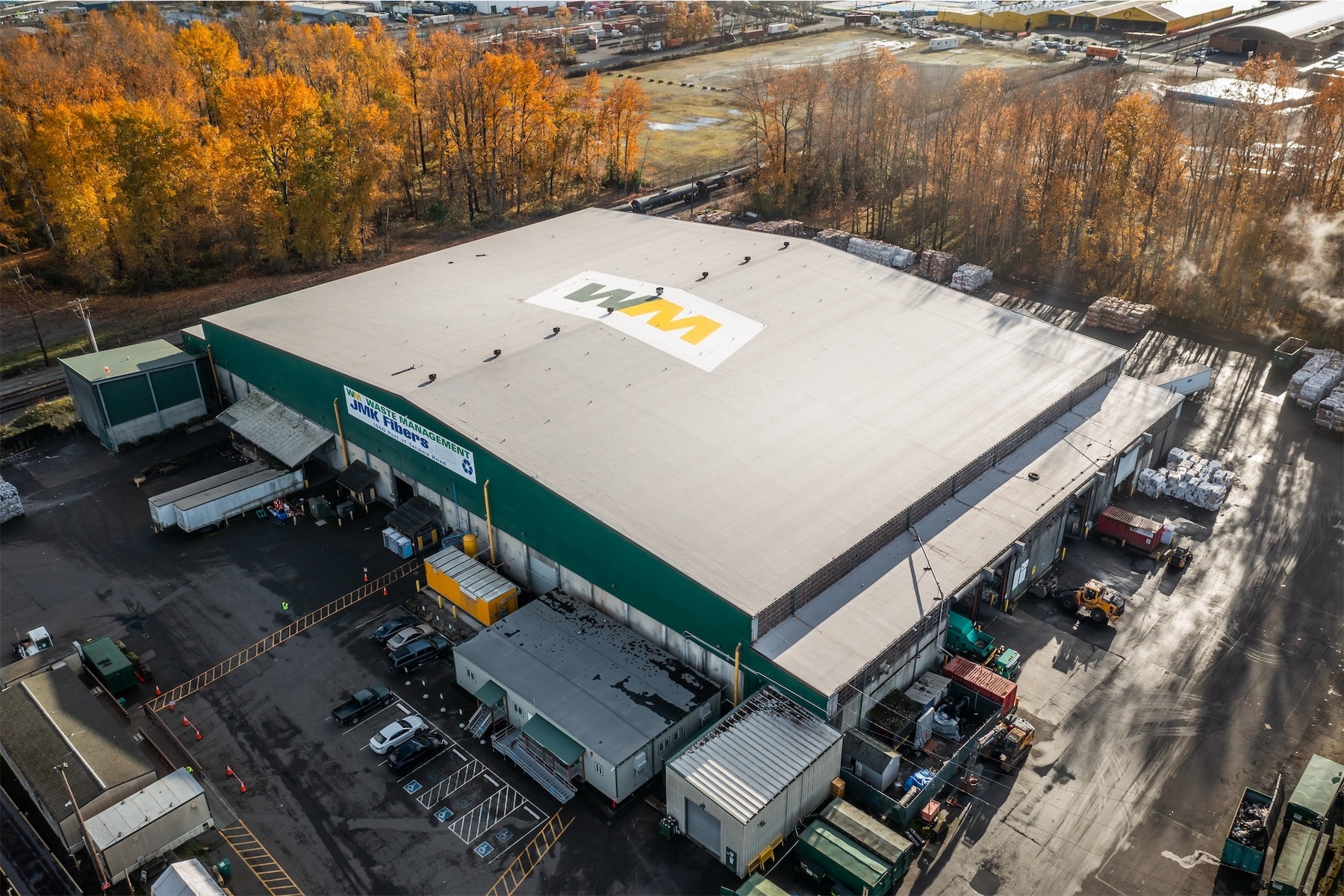
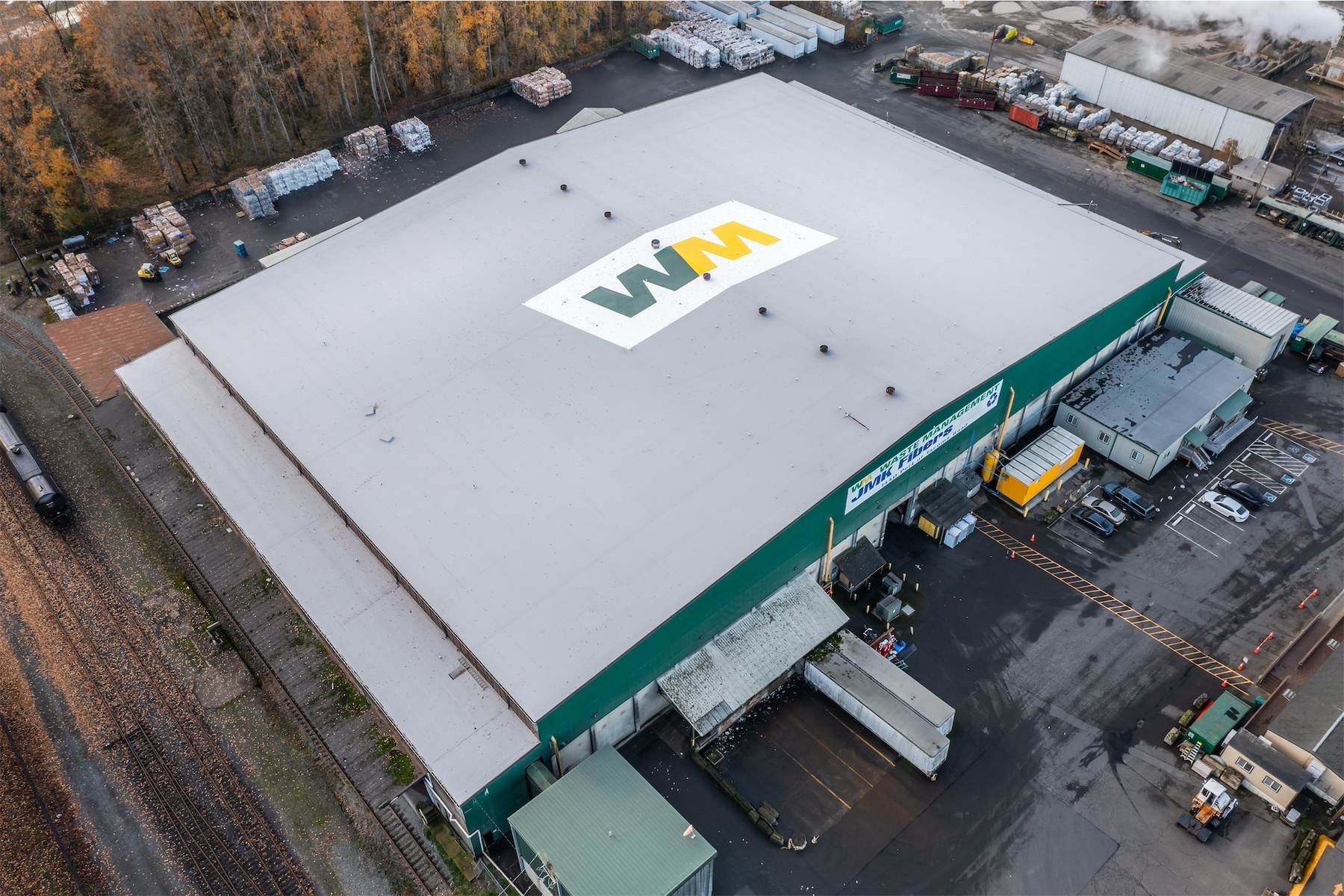
Originally constructed as an airplane hangar in Alaska during World War II, this massive structure was later transported by barge and reassembled near the Port of Tacoma—where it has stood for more than 60 years.
This 90,000 square foot building serves as a busy recycling facility, with trucks and forklifts moving continuously through the site.
- YEAR 2025
- SQUARE FEET 90,000
- LOCATION Tacoma, WA
Challenge:
This was not a quiet jobsite.
The facility operates as an active recycling warehouse, with continuous traffic moving through the building at all hours. That meant roofing work had to be carefully coordinated to avoid disrupting daily operations. Every movement—materials, equipment, debris—had to be planned around a live, busy environment.
Access posed another challenge. The building’s height made traditional methods impractical. There was no opportunity to stage equipment on-site long term, and forklifts could not reach the roof. Instead, materials and debris had to be lifted in carefully timed crane mobilizations—scheduled in tight windows, often early in the morning, to minimize interference with ongoing operations.
Once on the roof, the team was working atop a structure that still had its original tar roofing system—remarkably intact after decades of service, but well past its lifespan.
As the project progressed, additional conditions revealed themselves. Deteriorated fascia boards around the perimeter required full replacement, expanding the scope. All of this work had to be executed without slowing down the facility below.
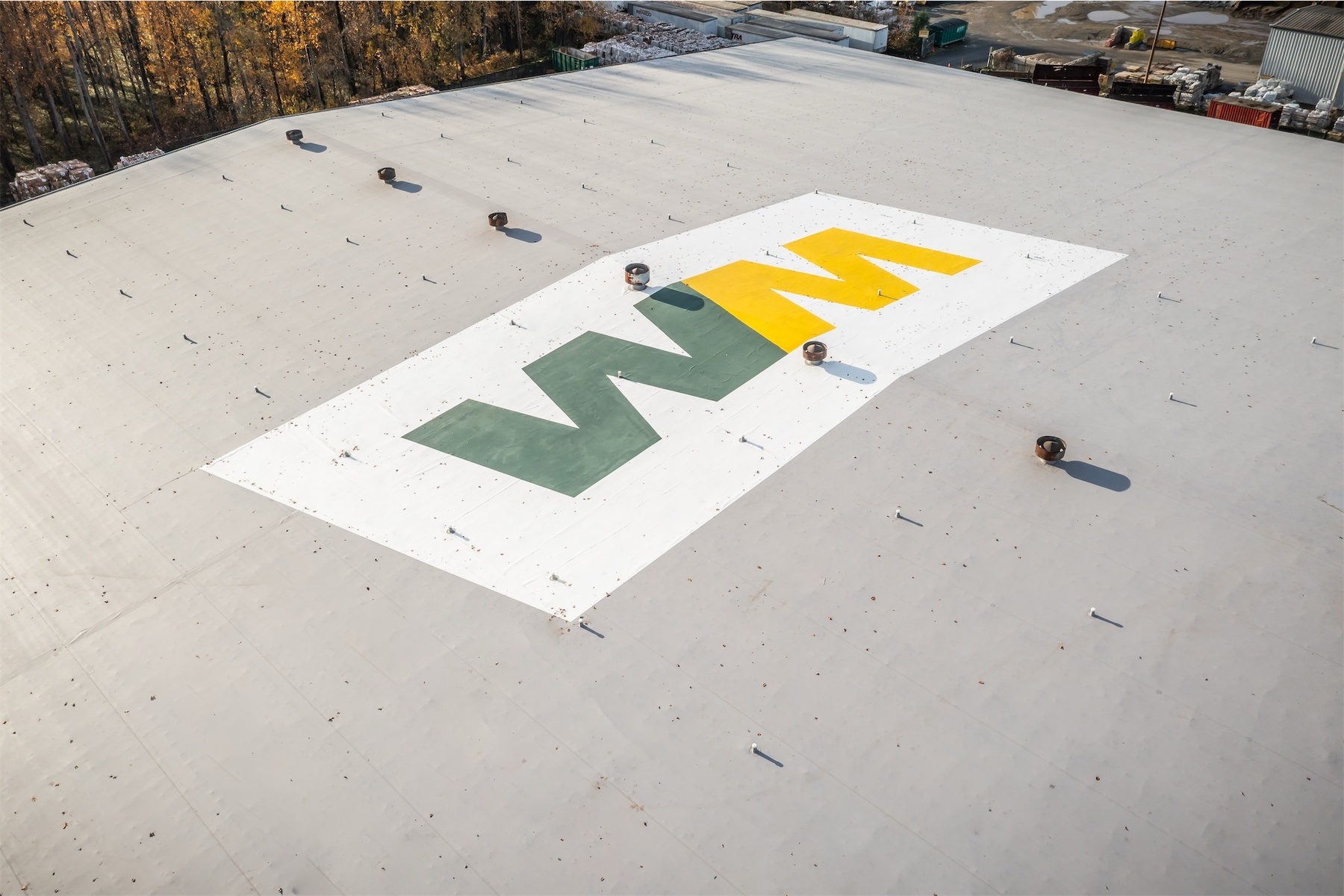
And there was one more thing — a great idea from the client: what if the roof could carry a full-scale Waste Management logo? Something bold enough to be seen from the air?
Solution:
The roofing system was designed as a fleece-back TPO membrane recover, mechanically fastened directly over the existing roof. This approach minimized disruption while delivering a durable, modern roofing assembly.
Perimeter improvements were made concurrently. All fascia boards were replaced with new pressure-treated lumber, and new metal was installed to tie the system together. A parapet edge was built up to allow for proper termination and detailing.
Roof penetrations and ventilation were addressed as well. Existing vents were removed and replaced in kind, fully integrated into the new roofing system.
Material handling required precision. With no ability to stage equipment on-site, crane mobilizations were scheduled multiple times throughout the project—coordinating the loading of new materials and removal of debris in the same windows to reduce overall lifts. Each mobilization was carefully timed and executed to keep the site clear and operational.
Access to the roof was provided via a 60-foot stair tower, allowing crews to move efficiently without interfering with ground-level activity.
The logo presented a unique challenge.
Originally, the idea was to fabricate it using colored TPO membrane, but minimum order requirements made that approach impractical. Instead, the team developed an alternative: applying the logo using silicone coating.
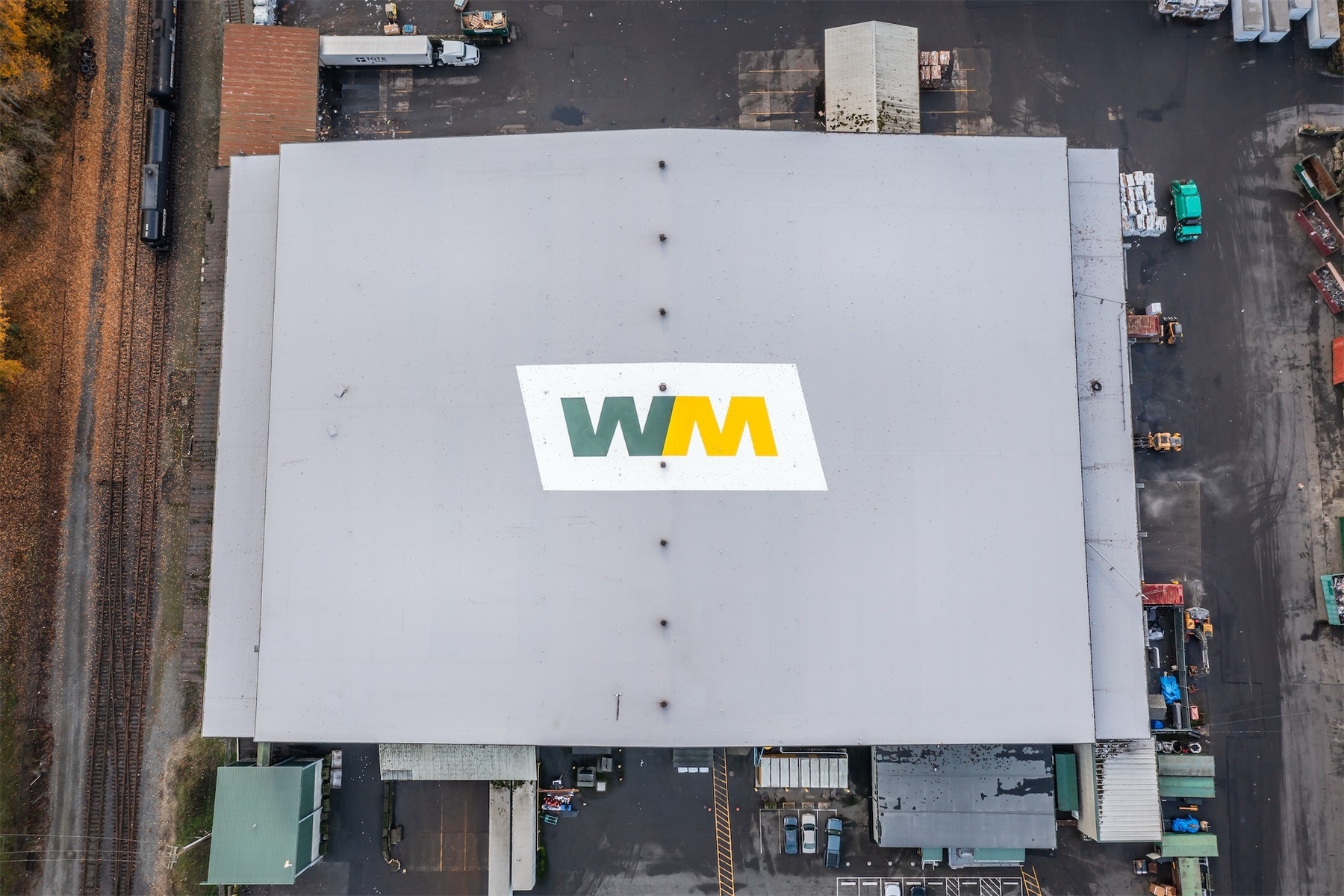
After installing a white TPO background panel, the logo was laid out precisely using measurements, chalk lines, and masking. A primer was applied, followed by green and yellow silicone coatings to create the final design. The work required a stretch of dry weather and was completed over several days in October—just before seasonal rains began.
Results:
The project was completed on an accelerated timeline, with the majority of work finished between July and late August.
Despite the complexity of the site, coordination with facility operations remained smooth throughout. Materials moved in and out efficiently, crews maintained safe access, and the building remained fully operational during construction.
The new roofing system provides long-term protection for a structure that has already proven its durability over decades.
And now, it does something more.
From above—visible to flights passing through the region—the Waste Management logo stands out clearly against the roof below. What began as a late-stage idea became a defining feature of the project, turning a functional upgrade into something recognizable at a much larger scale.
A new roof, built to last with branding that makes an impact — even from the sky.
axiom
let’s talk about your project
(360) 354-3100
24/7 Emergency Leak Response: (206) 475-2150
